For years, applicant tracking systems (ATS) were viewed as back-office infrastructure: necessary, but rarely strategic. They stored resumes, tracked requisitions, and helped HR stay compliant. Sourcing, job advertising, and employer branding were where most hiring leaders focused their energy.
That mindset no longer works.
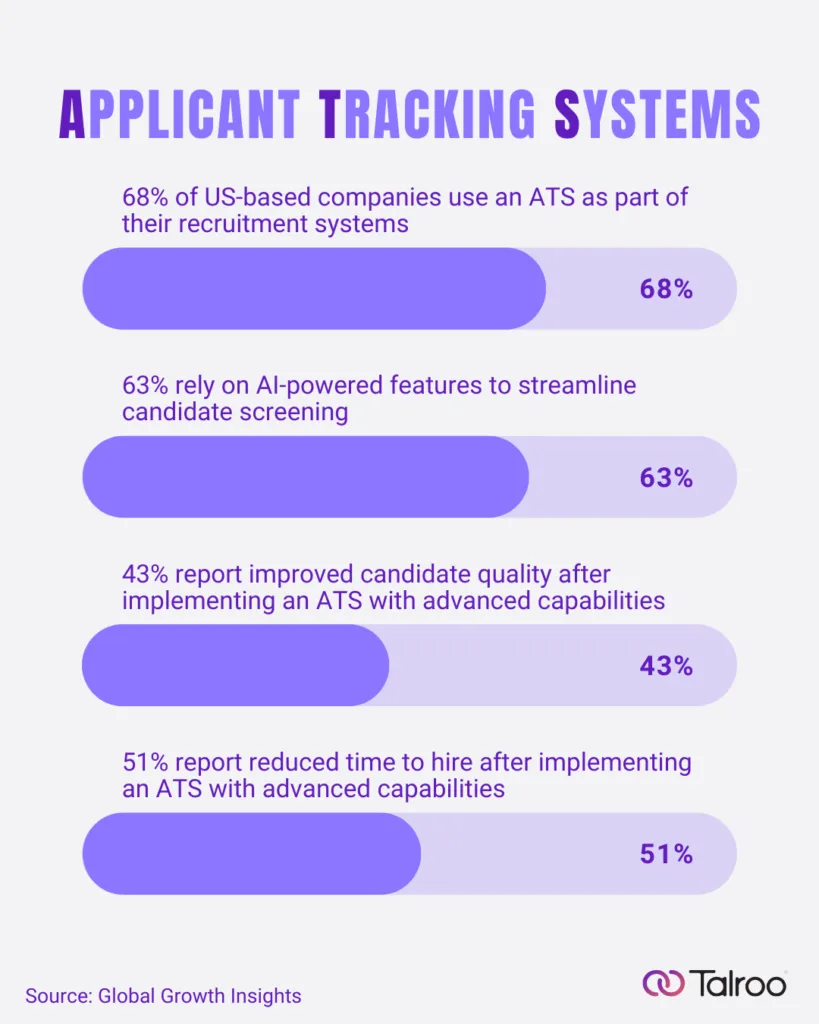
As sourcing platforms grow more volatile and candidate behavior continues to shift, your ATS has quietly become the backbone of hiring visibility, performance, and control. Today, over 68% of U.S.-based companies use an ATS as part of their recruitment systems, and more than 63% rely on AI-powered features to streamline candidate screening (Source: Applicant Tracking Software Market Size 2025–2033). These systems aren’t just administrative tools anymore; they are directly tied to outcomes. Organizations report measurable gains, including reduced time to hire and improved candidate quality after implementation.
In an environment where job traffic can fluctuate overnight and “free” applicants are no longer guaranteed, your ATS is often the deciding factor between roles getting seen…or disappearing entirely.
Modern hiring depends on interconnected systems. Jobs are distributed across dozens of channels, candidates apply from multiple devices, and recruiters need real-time insight into what’s working and what isn’t. Your ATS sits at the center of all of this.
When configured correctly, it determines:
When it’s not optimized, even strong sourcing strategies can fail. Jobs may never reach the right platforms. Applicants may fall into black holes. And recruiters are left guessing why candidate flow suddenly slowed.
In short, the ATS controls visibility. And visibility controls hiring outcomes.
One of the most overlooked roles of the ATS is its impact on job distribution. Every sourcing platform, job board, and programmatic solution depends on clean, structured data from the ATS.
If job titles, locations, employment types, or descriptions are inconsistent or incomplete, downstream performance suffers. Jobs may not index properly. They may appear in irrelevant searches or not appear at all.
An integrated ATS ensures that jobs are:
This matters more than ever as job distribution becomes more automated. Algorithms can’t fix bad data. If the ATS sends flawed information, no amount of ad spend or optimization can fully compensate.
Candidates today don’t come from a single source. They arrive through job boards, search engines, social media, employee referrals, and niche platforms. The ATS is responsible for making sure all of those candidates flow into one cohesive pipeline.
Strong ATS integrations ensure that:
Without this foundation, teams lose trust in their data. Recruiters may favor certain sources simply because they appear to perform better when, in reality, tracking gaps are skewing the numbers.
Clean integrations turn fragmented sourcing into a unified hiring strategy.
When candidate flow slows, the most common question hiring teams ask is, “What changed?” Without strong reporting, that question is nearly impossible to answer.
A modern ATS provides visibility into the entire hiring funnel, including:
This level of insight allows teams to diagnose issues early. Is traffic down, or are candidates abandoning the application? Did a job stop performing after a title change? Is one location underperforming compared to similar roles?
Organizations that leverage ATS reporting effectively can adjust faster, reallocate spend intelligently, and avoid prolonged hiring slowdowns.
More than 63% of companies now use AI-powered features within their ATS, and that number continues to grow. While headlines often focus on automation replacing recruiters, the real value of AI in the ATS is efficiency and consistency.
Common AI-driven capabilities include:
When used responsibly, these tools reduce manual work and help recruiters focus on higher-value tasks, like engaging candidates and partnering with hiring managers. They also create more consistent decision-making, which supports better candidate quality over time.
In fact, 43% of companies report improved candidate quality after implementing an ATS with advanced capabilities, while 51% report reduced time to hire. (Source: Applicant Tracking Software Market Size 2025–2033.)
Sourcing volatility isn’t going away. Organic job traffic rises and falls. Platform algorithms change. Candidate expectations evolve. In this environment, the ATS acts as a control center. It doesn’t replace sourcing strategy, but it enables teams to respond when conditions shift.
With the right system in place, hiring teams can:
Without it, teams are left reacting blindly, often too late to prevent missed hiring goals.
Selecting an ATS is no longer just a technology decision. It’s a strategic choice that shapes how your organization attracts, evaluates, and hires talent.
The most effective systems are those that integrate seamlessly with sourcing platforms, provide actionable reporting, and support recruiters with automation — not complexity.
As hiring becomes more data-driven and sourcing channels continue to fluctuate, the ATS is no longer a background tool. It’s the foundation that determines whether your jobs get seen, your candidates get engaged, and your team can adapt when the market changes.
In today’s hiring landscape, few decisions have a greater impact.
If you enjoyed this article, you might also like:
Tagged with
Recent Posts
Categories
Tags