Frontline roles in retail, healthcare, hospitality, and other hourly-intensive industries are central to organizational performance. Yet many job descriptions for these roles fail to deliver the candidate quality and response rates employers expect. In a competitive labor market, a poorly written job description can reduce visibility, deter qualified candidates, and increase time to fill.
The good news is that you can dramatically improve job description performance without extensive rewrites. A focused 30-minute audit can identify and correct the most common barriers to engagement. This article outlines a repeatable process recruiters and talent acquisition teams can use to optimize existing job descriptions quickly.
Why Job Description Quality Matters
A job description is often a candidate’s first interaction with your employer brand. Research shows that job seekers spend very limited time reviewing job descriptions and they decide early whether to apply. If key information is missing or unclear, candidates move on to other opportunities.
Moreover, job descriptions influence not only candidate behavior but also internal alignment. Clear, accurate descriptions help hiring managers and recruiters establish mutual expectations and reduce confusion throughout the hiring process.
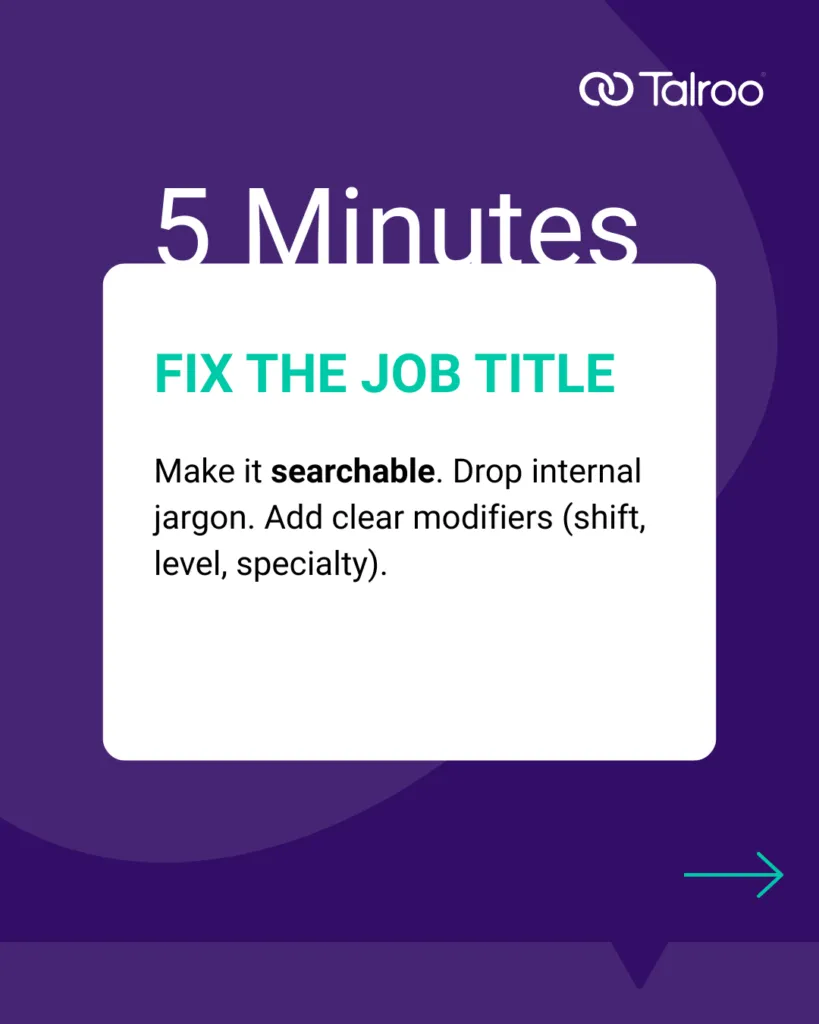
Step 1: Evaluate the Job Title (5 Minutes)
The job title plays a significant role in search visibility and click-through rates on job boards and search engines. A clear, straightforward title can increase the number of suitable candidates who view the posting.
When auditing the title:
A concise and accurate title increases the likelihood that the right candidates will find your job.
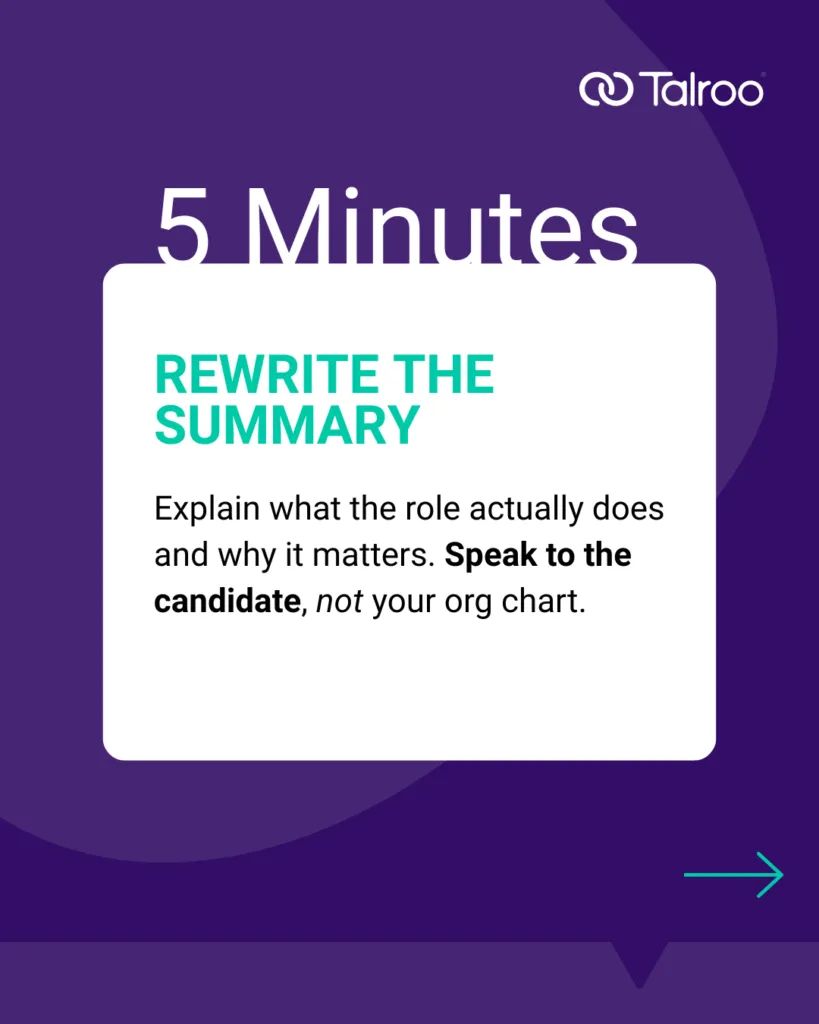
Step 2: Rewrite the Job Summary for Clarity (5 Minutes)
The job summary should quickly convey what the role entails and why it exists. Many underperforming descriptions either skip this section or use internal language that fails to resonate with candidates.
An effective summary should:
For example:
“As a Retail Sales Associate, you will support customer engagement by greeting shoppers, assisting with product selection, and processing transactions. This role plays a key part in creating a positive in-store experience.”
Keeping the summary clear and candidate-centric increases comprehension and encourages further reading.
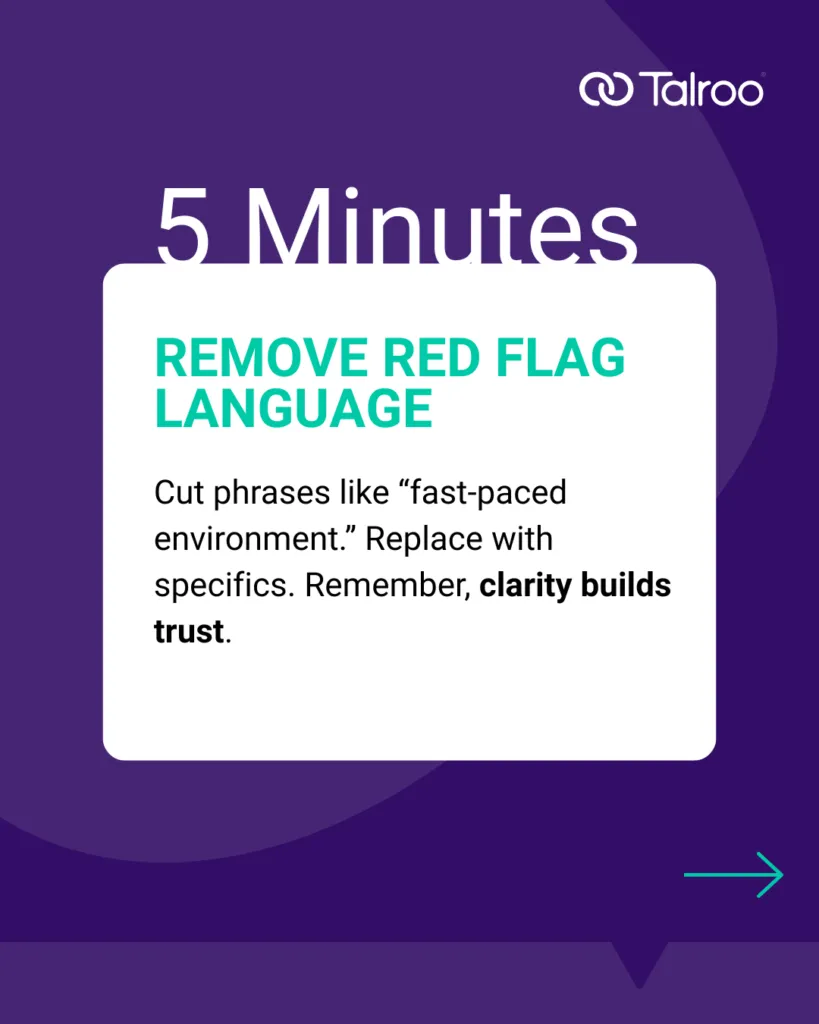
Step 3: Remove Red Flag Language (5 Minutes)
Certain phrases can inadvertently reduce candidate interest. Generic descriptors such as “fast-paced environment” or internal jargon may confuse or deter applicants.
During your audit, look for:
Replace these with specific expectations. Instead of saying “serve customers in a fast-paced environment,” describe what the candidate will do: “Engage with up to 50 customers per hour and assist with purchases, returns, and inquiries.”
Specific language establishes more realistic expectations and demonstrates transparency.
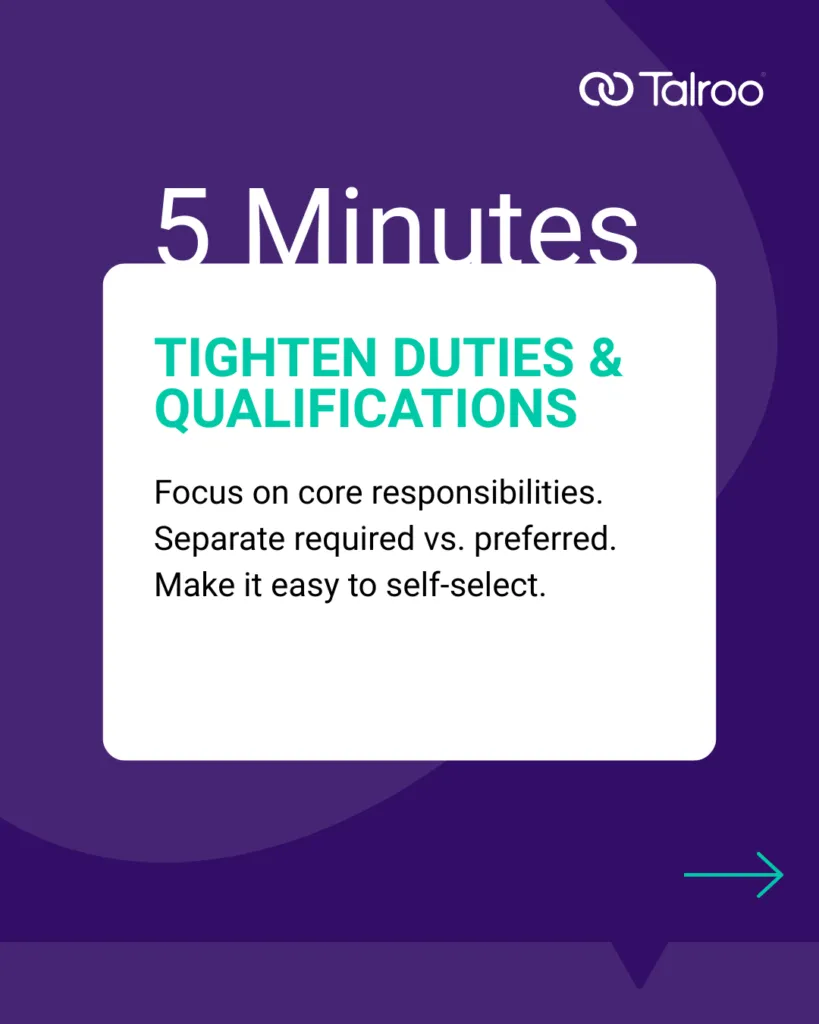
Step 4: Refine Duties and Qualifications (5 Minutes)
Many job descriptions underperform because they include either an overly broad list of responsibilities or an unrealistic set of preferred qualifications that limit candidate interest.
When auditing this section:
For example:
This clarity helps candidates self-select appropriately and improves the quality of the applicant pool.
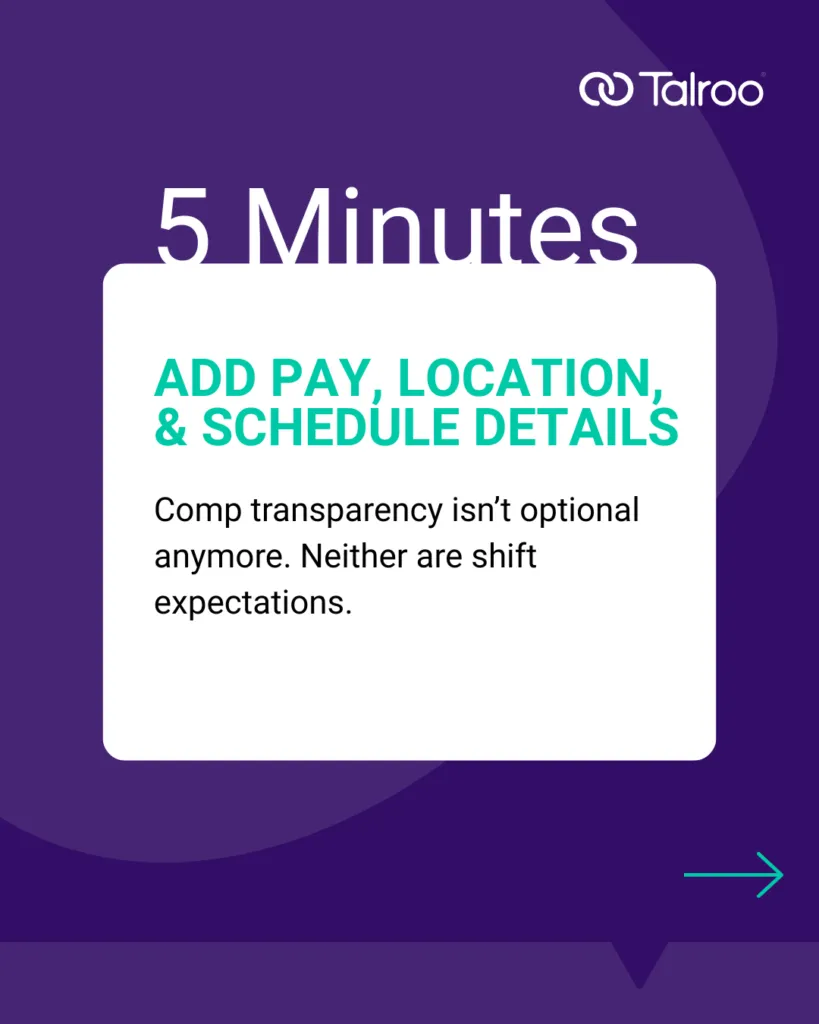
Step 5: Include Pay and Work Details Up Front (5 Minutes)
Failing to include compensation information and work details such as shift expectations is a common reason job descriptions underperform. Compensation transparency is increasingly expected by candidates and, in many jurisdictions, required by law.
Ensure your job description includes:
Providing this information early in the job description reduces unnecessary candidate screening and improves the likelihood of qualified applicants applying.
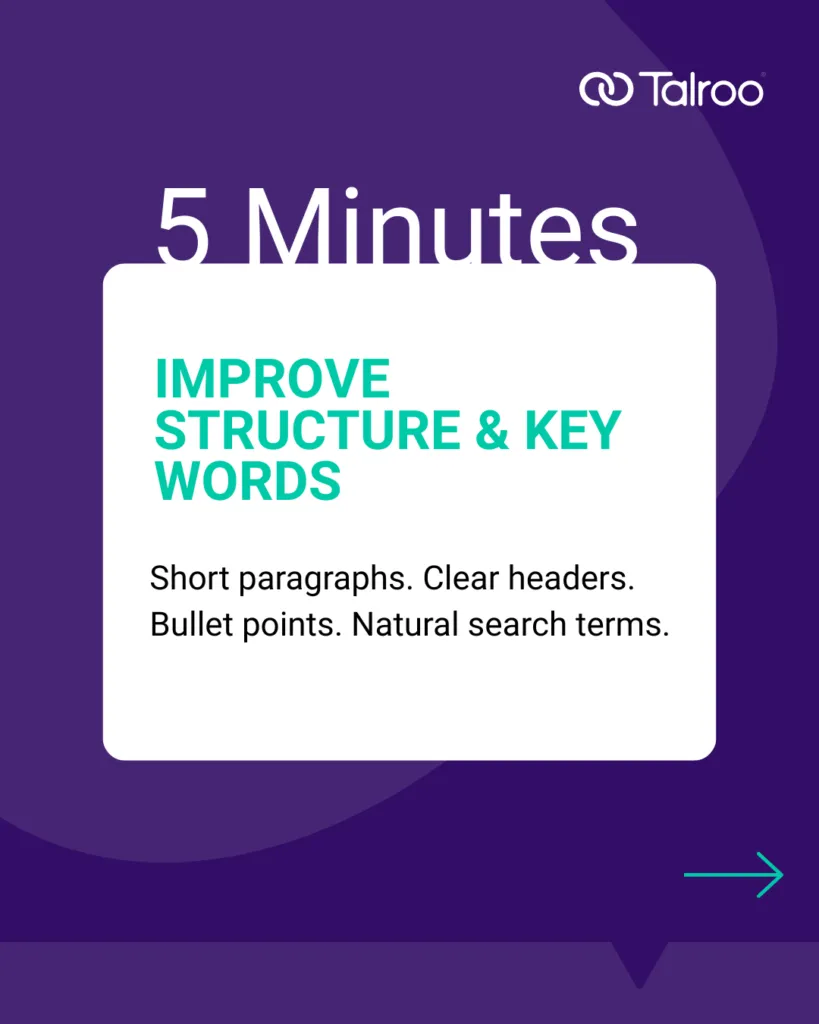
Step 6: Improve Readability and Searchability (5 Minutes)
After refining content, evaluate the job description’s structure and accessibility. Job seekers often scan postings quickly, so readability is essential.
Improve readability by:
Additionally, include relevant keywords naturally to improve visibility in job board searches and search engines. For frontline roles, this may include specific job titles, skills, and industry terms that candidates are likely to use when searching.
Measuring the Impact of Your Audit
Optimizing job descriptions can have a measurable effect on candidate engagement. Tools that track job performance metrics, such as click-through rates and apply rates, often show improved performance following even modest edits to job titles, summary language, and structure.
Job descriptions that align with candidate expectations and provide transparency also contribute to a better candidate experience — a critical factor in today’s employment market.
Downloadable Job Description Audit Checklist
To support this process, Talroo offers a Job Description Audit Checklist designed to guide you through each step of the audit quickly and systematically. It includes checks for job titles, summaries, duties, qualifications, pay transparency, and readability.
Download the checklist to make your job description audits fast and repeatable.
This resource is an effective tool for talent acquisition professionals, hiring managers, and recruiters looking for immediate improvements in job description performance.
Conclusion: A Quick Audit = A Quick Win
A poorly performing job description does not need to remain a bottleneck in your hiring process. By conducting a focused 30-minute audit, you can address common weaknesses and improve candidate engagement. This quick win empowers your team to optimize frontline hiring outcomes without major time investments.
Investing in clarity, relevance, and candidate-focused language today can lead to a stronger talent pipeline tomorrow.
If you enjoyed this article, you might also like:
How To Write Job Descriptions | Talroo
How to Define Job Duties and Responsibilities | Talroo
A Recruiter’s Guide to Performance-Driven Job Postings | Talroo
Posted Under
Tagged with
Recent Posts
Categories
Tags