Early turnover is an expensive problem. According to research from the Work Institute, nearly one in four employees leaves a job within the first year, and the top reason? Misaligned expectations. Candidates often accept roles based on how they perceive the job will be, only to realize after day one that reality doesn’t match the promise. This mismatch can derail engagement, lower productivity, and drive costly backfills.
For recruiters and HR professionals, the solution starts before the candidate even walks through the door: in your job ad. Job postings aren’t just a tool to attract candidates; they are the first step in setting realistic expectations that directly influence retention.
The Cost of Misaligned Expectations
Misalignment between what a candidate thinks a role entails and what it actually requires can manifest in multiple ways. Perhaps an applicant anticipates a flexible work environment but finds rigid schedules. Maybe they expect a structured career path but encounter limited growth opportunities. Or they assume the workload will be manageable only to be overloaded within weeks.
These surprises aren’t trivial. They erode trust and can prompt employees to leave, sometimes before completing their probation period. According to Gallup, replacing an employee can cost anywhere from 50% to 200% of their annual salary depending on the role. That’s a steep price for avoidable miscommunication.
By aligning expectations from the start, organizations can significantly improve retention rates while creating a more engaged, motivated workforce. And it begins with transparency in your job advertisements.
Use this list as a guide the next time you audit your job postings and job descriptions. If you’re struggling to improve retention rates, the time to do that is now.
1. Be Transparent About the Workload
Candidates need to know what the day-to-day reality of a role looks like. Ambiguity around workload often leads to burnout and early exits. Job ads should clearly outline responsibilities, typical hours, peak periods, and performance expectations.
For example, instead of a generic “fast-paced environment,” consider specifying, “Expect 40–45 hours per week with seasonal peaks requiring up to 50 hours.” This clarity allows candidates to self-assess their capacity and fit for the role. It also signals that your organization values honesty, which builds trust before employment even begins.
2. Describe the Culture Accurately
Culture fit is another area where misalignment drives turnover. Employees who feel they don’t belong or can’t thrive within a company’s culture often leave quickly. Job ads should provide an authentic snapshot of workplace norms, values, and expectations.
Rather than relying on buzzwords like “innovative” or “dynamic,” describe what those terms mean in practice. For example, instead of saying “we are innovative,” you might explain, “Our frontline teams share quick improvement ideas during pre-shift huddles, and supervisors regularly test employee suggestions to streamline workflows or improve customer service.” This level of specificity helps candidates picture the real work environment and reduces culture shock after hiring.
3. Clarify Performance Metrics and Expectations
Early turnover often stems from a mismatch between employee expectations and employer metrics. Candidates need to know how success is measured in their prospective role.
Job ads should explain performance goals, evaluation processes, and key performance indicators (KPIs). For instance, instead of stating “responsible for sales growth,” you might clarify: “Expected to meet daily productivity targets, such as completing 40–50 orders per shift, with supervisors providing regular check-ins and support during weekly shift reviews.” This transparency helps candidates understand both what the role demands and the support they’ll receive to succeed.
4. Outline Career Paths and Growth Opportunities
Ambition drives retention. If candidates can’t see a clear path forward, they are more likely to jump to another company that promises advancement. Job postings should communicate potential career trajectories, opportunities for skill development, and the company’s approach to promotions.
For example, a job ad could include a section like: “Successful team members often advance from Customer Support Analyst to Shift Supervisor within 18–24 months, supported by formal mentorship and internal training programs.” By outlining realistic growth prospects, you attract candidates aligned with your long-term vision and reduce turnover caused by unmet expectations.
5. Structure the Job Description for Clarity
How you present this information matters just as much as what you include. A well-structured job description helps candidates quickly absorb the most important details, reducing confusion and frustration.
Consider breaking your ad into clear sections:
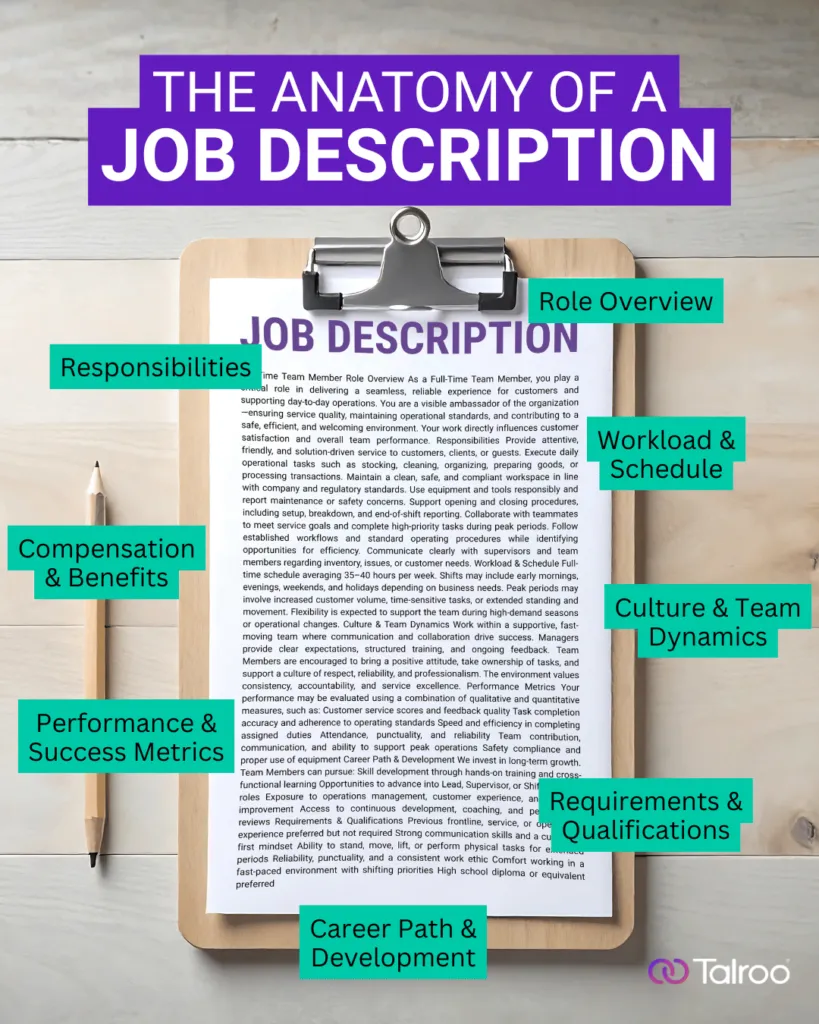
This structure ensures candidates receive a comprehensive, transparent picture of the role before applying.
The Benefits of Transparency in Job Ads
Investing time to craft transparent, realistic job ads yields measurable returns. Organizations that set accurate expectations consistently report higher retention rates, because candidates who truly understand the role before accepting it are more likely to stay and thrive once they’re in it. This clarity also leads to improved engagement. When employees know what to expect (whether in workload, culture, or performance metrics) they feel more confident, supported, and motivated in their work.
There’s also a direct financial benefit. Reduced turnover lowers the frequency and expense of backfills, easing pressure on recruiting teams and budgets. Beyond that, transparent job ads strengthen your employer brand. When organizations are honest about both the opportunities and the challenges of a role, it signals integrity and attracts candidates who value authenticity.
Ultimately, a job ad is more than a recruitment tool. It serves as a contract of trust between employer and candidate. Misrepresentation or vague descriptions may boost application numbers in the short term, but they also create far greater long-term costs in the form of early turnover, disengagement, and damaged credibility.
Practical Tips for Creating Retention-Focused Job Ads
By embedding transparency into the hiring process from the first touchpoint, organizations can hire candidates who are not only qualified but also aligned with the company’s reality and culture.
Final Thoughts: Job Ads Can Be a Retention Tool
The hiring process doesn’t end when the offer is signed. It begins with how you communicate the role. Misaligned expectations are a leading cause of early turnover, but clear, realistic, and well-structured job ads can prevent disappointment before it starts.
When candidates know what to expect in terms of workload, culture, performance metrics, and career paths, they are more likely to accept a role they can succeed in, and more likely to stay long-term. In the end, honest job ads aren’t just good practice; they’re a smart investment in retention, engagement, and organizational stability.
It’s time to rethink job postings not just as a magnet for applicants, but as a retention tool. Transparency, clarity, and honesty will save your company time, money, and frustration — while building a workforce that’s engaged, prepared, and committed from day one.
If you enjoyed this article, you might also like:
Building Employer Brand Into Every Job Post | Talroo
A Recruiter’s Guide to Performance-Driven Job Postings | Talroo
Tagged with
Recent Posts
Categories
Tags