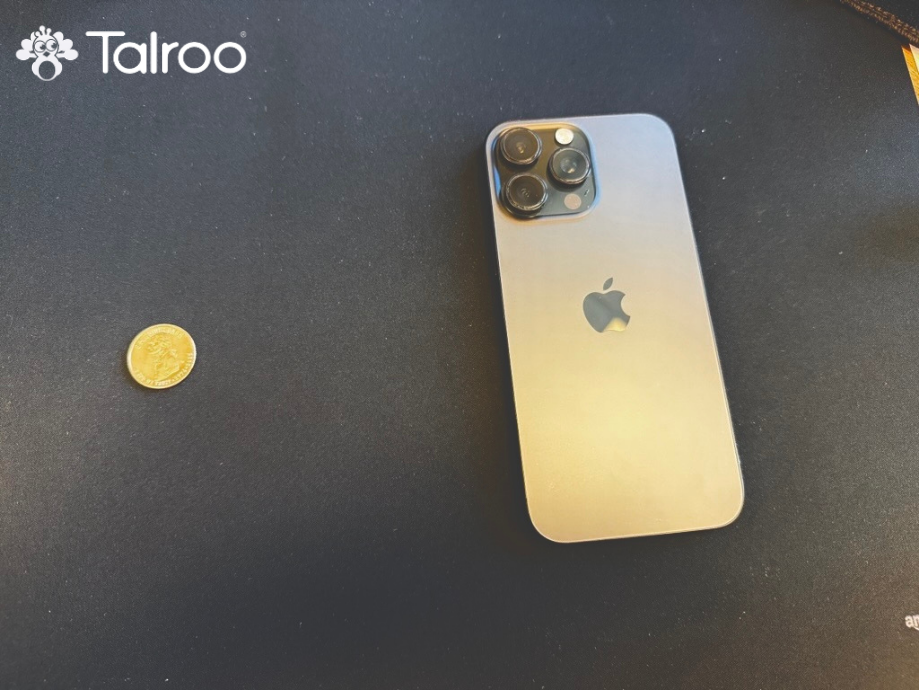
When Apple introduced the first iPhone in 2007, one detail surprised me.
You couldn't open the back.
At a time when many phones had removable batteries and interchangeable components, the iPhone was sealed shut.
I could almost hear it saying:
“I am complete. Don't even imagine tampering with me.”
Oddly enough, that confidence was comforting.
It made me think about a much older design that communicated something similar.
In late 17th-century England, coin clipping had become a serious problem.
People found that they could shave a tiny amount of silver off a coin's edge and still use it at its full value.
Each shaving seemed insignificant.
But more and more coins became lighter and misshapen. Trust in the currency began to collapse.
One important protection was the milled edge. The tiny ridges around the coin made shaving visible.
Such a small detail. So effective.
Two designs, separated by three centuries, both communicating wholeness.
One made its loss visible.
The other made its preservation feel deliberate.
That brings me to a word we use all the time: integrity.
Today, most people understand integrity as honesty.
But its original meaning was closer to wholeness.
It shares a Latin root with “integer,” a whole number.
1 is whole.
0.99 is broken.
Mathematically, the difference is only 1%.
But when it comes to trust, that difference can be everything.
Because trust is not always proportional to what is missing.
Once something is incomplete, we no longer see what remains the same way.
Wholeness is binary.
And so, often, is trust.
#Talroo #Integrity #DesignThinking #Trust

Bruce Ge
Founder & CEO
I'm building Talroo with an exceptional team, focused on precision, innovation, and long-term impact in the hiring space.